悠久の時を超え
白鳳の風が届く
みほとけの気配にふれ
心、やすらぐ
白鳳の風が届く
みほとけの気配にふれ
心、やすらぐ
An Invitation to the Hakuhō Period
Transcending the passage of eternal time,
the breeze of the Hakuhō era reaches us.
In encountering the presence of the Buddha,
the heart finds peace.
Transcending the passage of eternal time,
the breeze of the Hakuhō era reaches us.
In encountering the presence of the Buddha,
the heart finds peace.
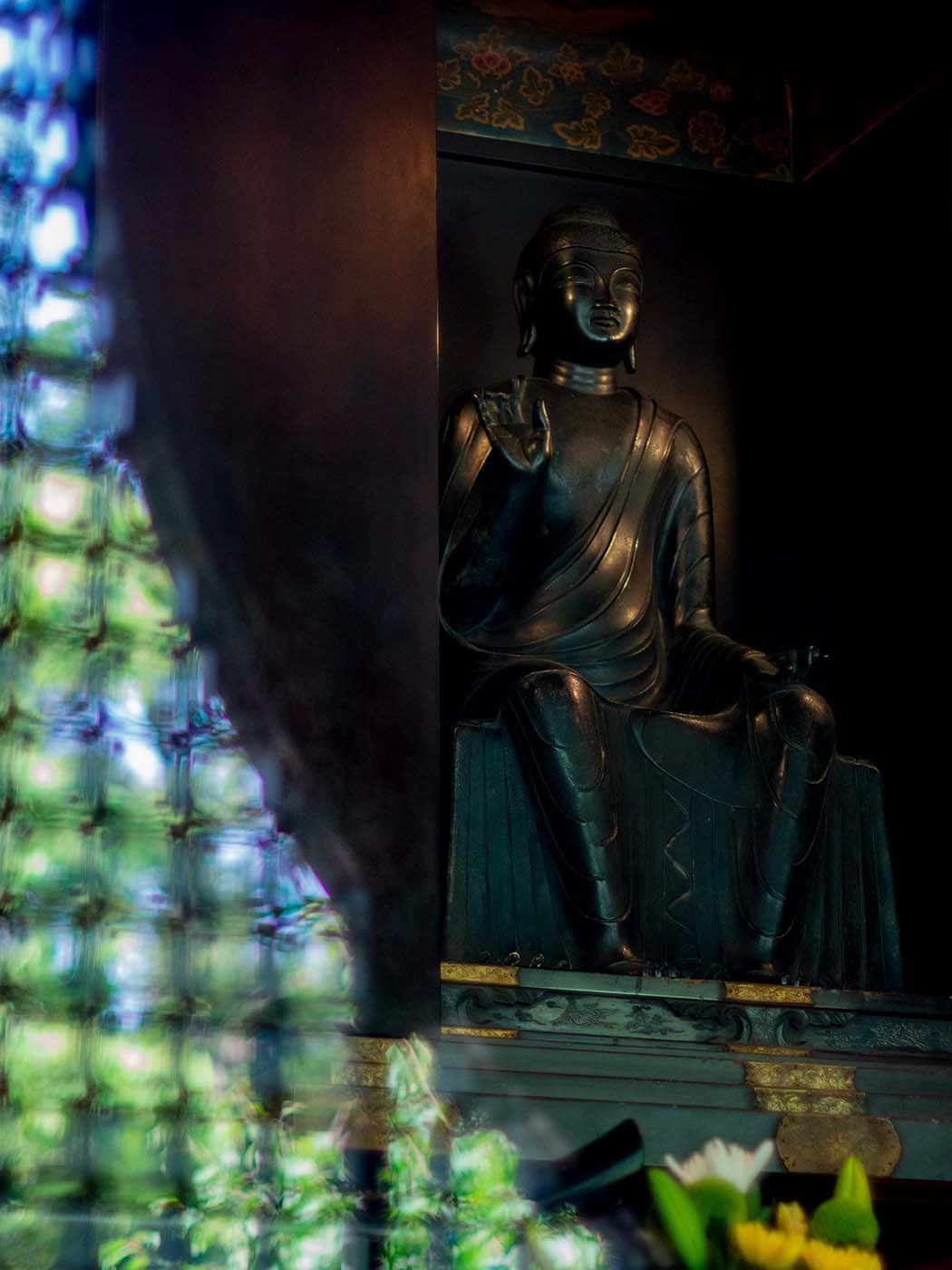
深大寺の釈迦如来像は、白鳳期(1300年前)の造立とされる東日本最古の国宝仏です。椅子に座る姿は白鳳仏の特徴で、飛鳥から奈良へと移り変わる時代の息づかいを今に伝えています。
改築前の釈迦堂では外光が差し込み、像に映り込む景色が独特の静けさを生み出していました。精神的に辛い時期、私はこの像の前で心を整えられて救われてきました。
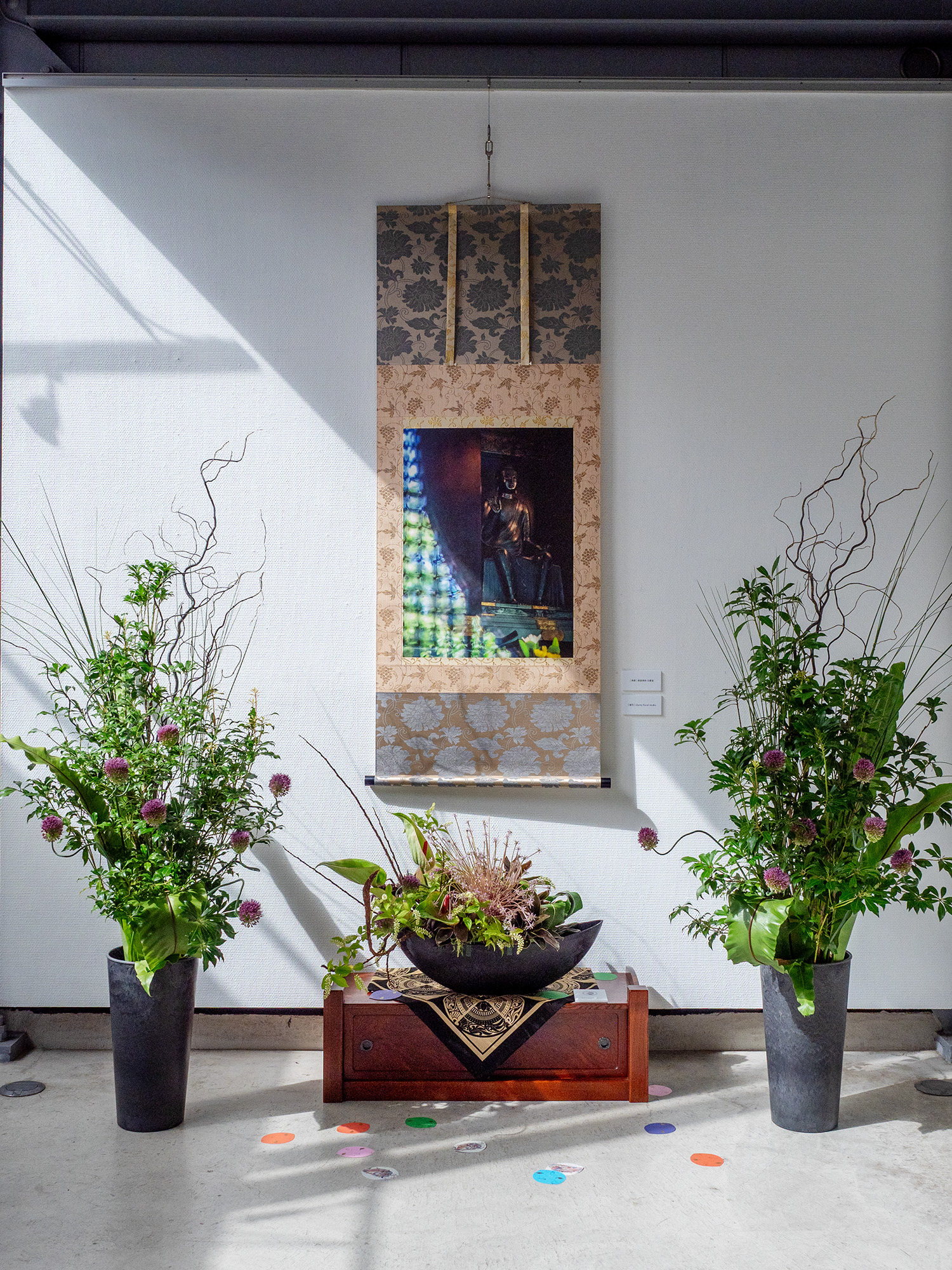
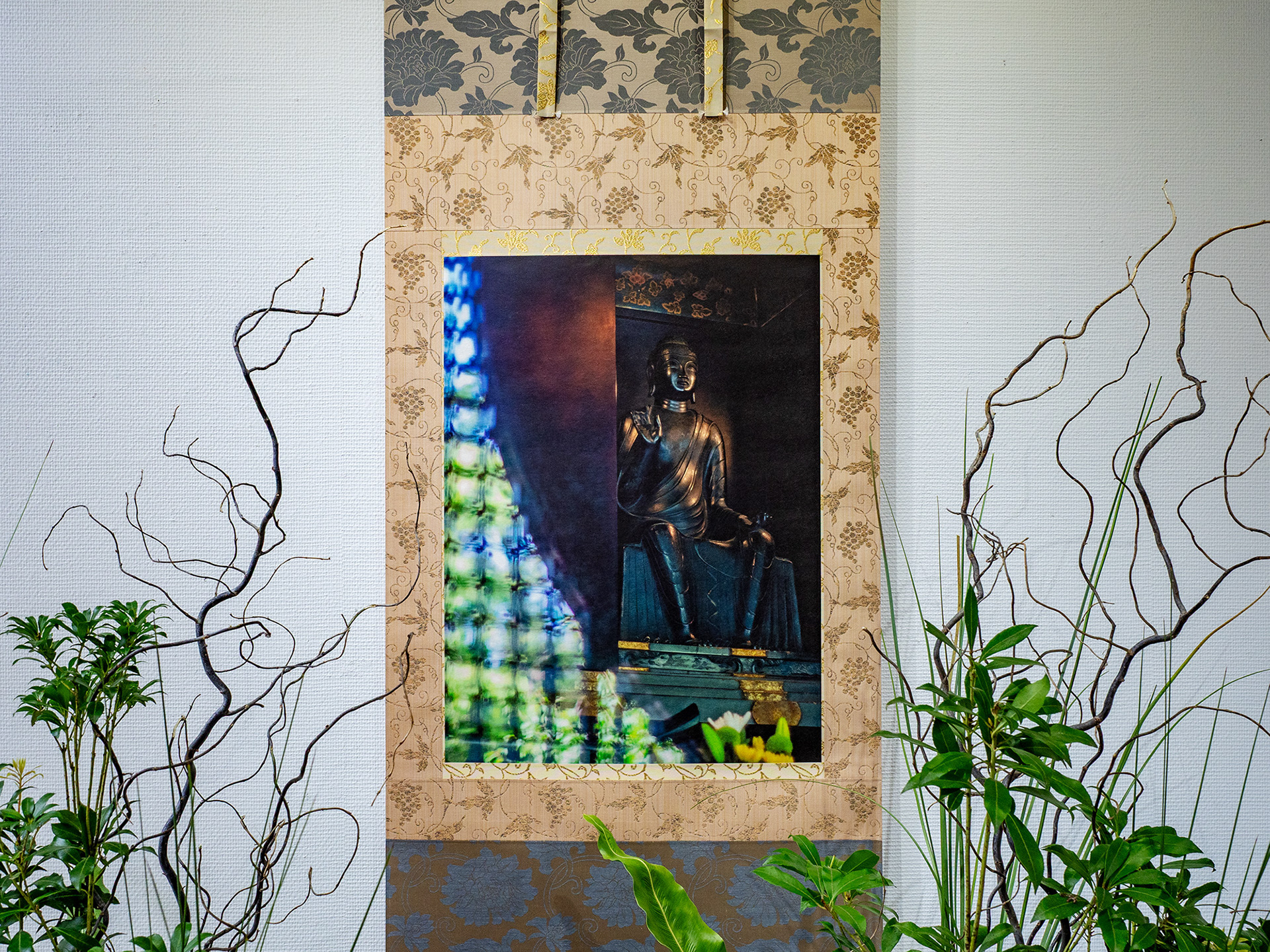
その思い入れのある1枚は初の個展で、和紙にプリントし掛軸として仕立てることで、日本の伝統工芸と仏像写真のコラボレーションを実現させました。和紙は1300年の歴史を持つ日本の手すき紙で、薄くしなやかでありながら長く残る素材です。掛軸は空間に季節や祈りをもたらす日本独自の表現形式であり、仏像の静謐な気配をより深く伝えてくれます。
The Shaka Nyorai statue at Jindaiji Temple is a National Treasure and is considered the oldest extant Buddhist statue in eastern Japan. It is believed to have been created during the Hakuhō period, approximately 1,300 years ago. The seated posture of the figure is characteristic of Hakuhō Buddhist sculpture and reflects the transitional spirit of the era, as Japan moved from the Asuka period to the Nara period.
Before the reconstruction of the Shaka Hall, natural light entered the space, and reflections of the surrounding environment appeared on the surface of the statue, creating a distinctive atmosphere of quietude. This interplay of light, space, and form became a key element in my photographic approach.
The photograph was first presented in my debut solo exhibition, where it was printed on washi and mounted as a hanging scroll. This format brought together Japanese traditional craftsmanship and Buddhist sculpture photography. Washi is a handmade Japanese paper with a history of over 1,300 years, known for its thinness, flexibility, and long-term durability. The hanging scroll, a uniquely Japanese mode of presentation, introduces a sense of seasonality and contemplation into the space, deepening the serene presence of the Buddhist statue.